Repeatable Geometry Across Every Production Run
CNC Machining in Texarkana for components requiring consistent dimensions across prototypes, short runs, and recurring production quantities
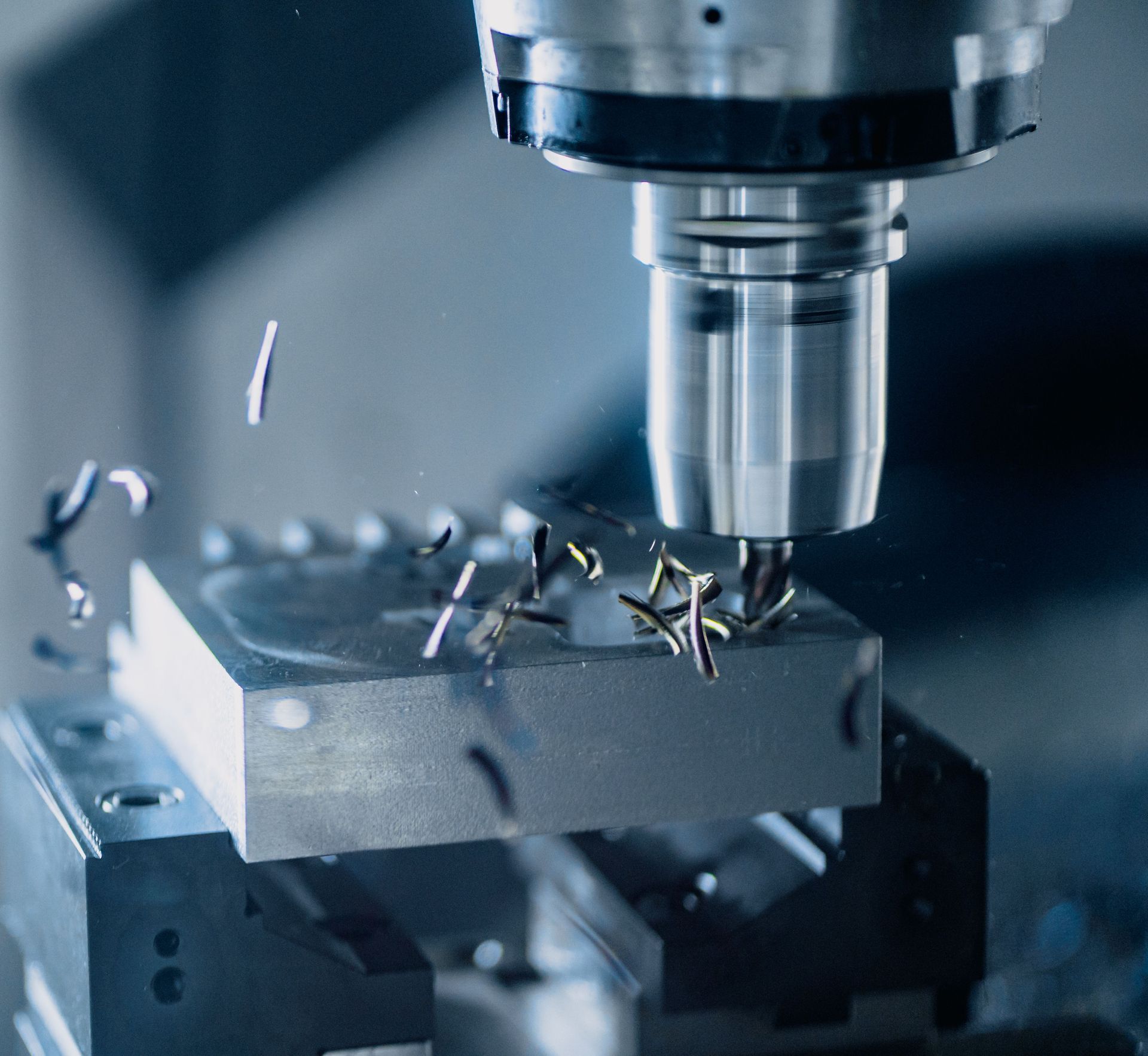
Computer-controlled machining becomes essential when a project moves from one-off work into repeatable production—where the second part, the tenth, and the fiftieth need to match the first without relying on operator judgment at every step. Eagle Cutting & Supply provides CNC machining in Texarkana for customers who need components produced from drawings or established specifications with geometry that holds consistently across a run. The process supports prototype quantities for evaluation, short production runs for assembly builds, and recurring orders where the same part is needed on a regular basis.
CNC machining translates a digital part file or engineering drawing into a programmed set of tool paths that the machine executes the same way on every cycle. That repeatability eliminates the part-to-part variation that accumulates with manual operation over a run, which matters most for components that must assemble with other machined or fabricated parts. Customers providing detailed drawings with clearly defined features—holes, bores, slots, profiles, and surface specifications—give the programming process the information needed to produce accurate results from the first part.
Submit your drawings and production requirements to discuss how CNC machining fits your current project scope.
The Difference Between Repeatable and One-Off Machining
Setting up a CNC machine for a given part involves writing and proving out a program that encodes every tool path, depth of cut, and feature sequence required to produce that component. That upfront investment in programming pays off across repeated parts, since each subsequent piece runs from the same verified program without re-setup. For customers moving a prototype design into production, that transition is straightforward—the program used to cut evaluation parts becomes the baseline for production quantities without geometry changes.
Customers ordering CNC-machined components typically observe that parts arrive with consistent feature locations, matching profiles, and dimensions that align with drawing callouts across the full quantity ordered. Assembly processes that required individual fitting or shimming with inconsistent parts often run more smoothly when components are produced from a verified CNC program. Eagle Cutting & Supply positions CNC machining alongside its cutting and fabrication capabilities so that customers can consolidate multiple manufacturing steps with a single provider rather than coordinating between separate shops.
The breadth of work that CNC machining can handle depends on part geometry, material, and the specific features required. Customers should provide complete drawings with tolerances, surface finish requirements where applicable, and material specifications when submitting a project. Parts that fall outside standard machining scope—for example, requiring specialized fixturing or uncommon materials—are evaluated on a case-by-case basis, and the quoting conversation is the right place to identify any project-specific considerations before work begins.
Questions Customers Ask About CNC Machining
The following answers cover the most common questions that come up when engineers and procurement teams are evaluating CNC machining for their parts requirements.
How does CNC machining handle parts transitioning from prototype to production?
The part program developed during prototype production serves as the foundation for production runs—geometry does not need to be re-programmed unless the drawing changes, which reduces setup time and maintains consistency between prototype samples and production parts.
What drawing information is needed to start a CNC machining quote?
Dimensioned drawings with all feature locations, tolerances, material callout, and any surface finish requirements give the programming team everything needed to evaluate feasibility and provide an accurate quote.
Why does keeping cutting and machining with one provider benefit a project?
When the same shop that cuts blanks also machines them, part handoff between processes is direct—dimensional issues identified during machining can be addressed immediately without delays caused by coordinating between separate vendors.
When should customers in Texarkana choose CNC over manual machining?
CNC is the appropriate choice when a project involves multiple identical parts, complex geometry that must be reproduced exactly, or recurring orders where consistency across separate production runs is required.
What factors affect CNC machining pricing beyond part quantity?
Material machinability, number of setups required, feature complexity, and tolerance tightness all influence the time required to produce a part—providing complete drawings upfront allows Eagle Cutting & Supply to account for all of these factors in the quote.
Eagle Cutting & Supply works through the full production path from raw material through finished machined component, with cutting, fabrication, and machining available under one roof. Contact the shop at (903) 838-4579 or bring your drawings in to start the quoting process for your CNC machining project.