Parts Built From Drawing Through Repeatable Production
Prototype and Production Manufacturing in Texarkana for customers developing new components or needing consistent quantities of an established part design
Taking a part from a drawing to a physical component—and then repeating that component accurately across a production quantity—requires coordinating multiple processes without losing dimensional control between them. Waterjet cutting, laser cutting, machining, bending, and forming are each part of how Eagle Cutting & Supply supports that path, and having those capabilities in one place means a design can move from prototype evaluation to production without the tolerance and communication issues that accumulate when work is split across multiple vendors. This service addresses both the customer building a first article and the one returning for consistent ongoing quantities.
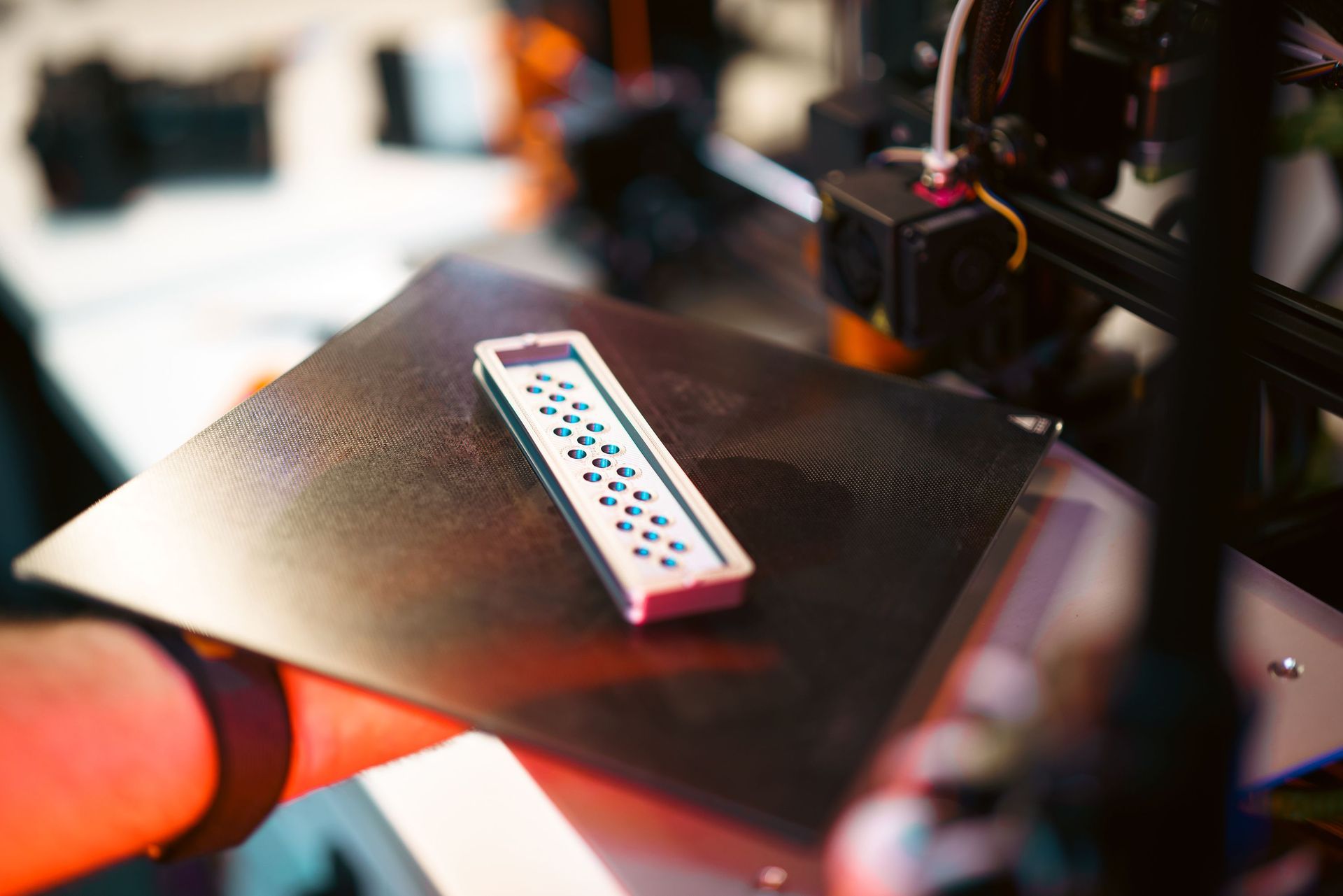
Prototype work and production work involve different priorities even when the part itself is identical. A prototype is often about confirming that the design produces the geometry and fit the application requires—identifying where material callouts, tolerances, or feature placements need adjustment before a quantity is committed. Production work shifts the focus to repeatability: can each piece be cut, formed, and machined to the same specification with the same result? Both questions are answered through the same set of capabilities, but the process emphasis and the review criteria change between the two stages.
Provide your drawings, material requirements, target quantities, and any production timing considerations to start a specific discussion about what your manufacturing path involves.
The Difference Between Prototype and Production Priorities
At the prototype stage, the goal is producing a part that can be evaluated against the actual application—assembled, tested, or compared against a mating component—so that any design adjustments can be made before production quantities are released. Waterjet and laser cutting are both useful at this stage because they can cut from the specified material without tooling, which means design revisions can be incorporated quickly without scrapping dedicated fixtures or dies. When machining, bending, or forming is part of the prototype scope, those operations are performed to the drawing with the understanding that tolerances and feature specifications may be refined after the first article review.
Once a design is confirmed and production begins, what customers notice is consistency: each piece arrives to the same dimensions, with edges and features in the same positions, ready for the assembly or installation step without individual fitting or adjustment. Eagle Cutting & Supply coordinates the cutting, forming, and machining steps within the same facility, which means the inspection and handoff between operations happens internally rather than through a shipping and receiving cycle that introduces handling variation and delays.
Production quantities vary considerably depending on the part and the application, and the manufacturing approach is scaled accordingly—some parts are most efficiently handled through laser cutting with secondary forming, while others require waterjet for material or thickness reasons, or machining as the primary operation. Those decisions are made based on what the drawing specifies and what the production requirement demands, not a fixed default sequence.
What Customers Ask Before Starting a Project
Customers at the beginning of a manufacturing project—whether developing a first prototype or planning a production run—typically want to understand how the process works and what information is needed to get an accurate evaluation.
What files or documents are needed to start a prototype or production job?
A dimensioned drawing with material callouts, tolerances, and any finish or edge requirements gives the foundation needed for an accurate evaluation—CAD files in common formats can supplement drawings and support programming for cutting operations.
How does the prototype stage affect the production process downstream?How does the prototype stage affect the production process downstream?
Features and tolerances confirmed on the prototype become the production standard, so design adjustments made during prototype review are incorporated before the production quantity is released rather than discovered mid-run.
Why does having cutting, machining, and forming in one place matter for part quality?
When operations are coordinated internally, the reference dimensions from the previous step are verified before the next step begins, which reduces the compounding of small variations that can occur when parts move between separate facilities.
What types of materials are typically processed through prototype and production manufacturing?
Steel, aluminum, and other structural metals are common across industrial and fabricated component work in Texarkana, with material selection driven by the part's application, load requirements, and any finish or weldability considerations.
When should a customer move from prototype to production quantities?
The transition is appropriate when a first article has been evaluated against the application and confirmed to meet dimensional and functional requirements—moving to production before that confirmation risks committing material and labor to a specification that still needs refinement.
Eagle Cutting & Supply can review your drawings and production requirements to map out how waterjet cutting, laser cutting, machining, bending, and forming apply to your specific part—call (903) 838-4579 or bring your documentation in to begin that discussion.