Custom Fabrication Built From Your Actual Requirements
Metal Fabrication in Texarkana for industrial projects that move from drawing or existing part through to a finished fabricated component or assembly
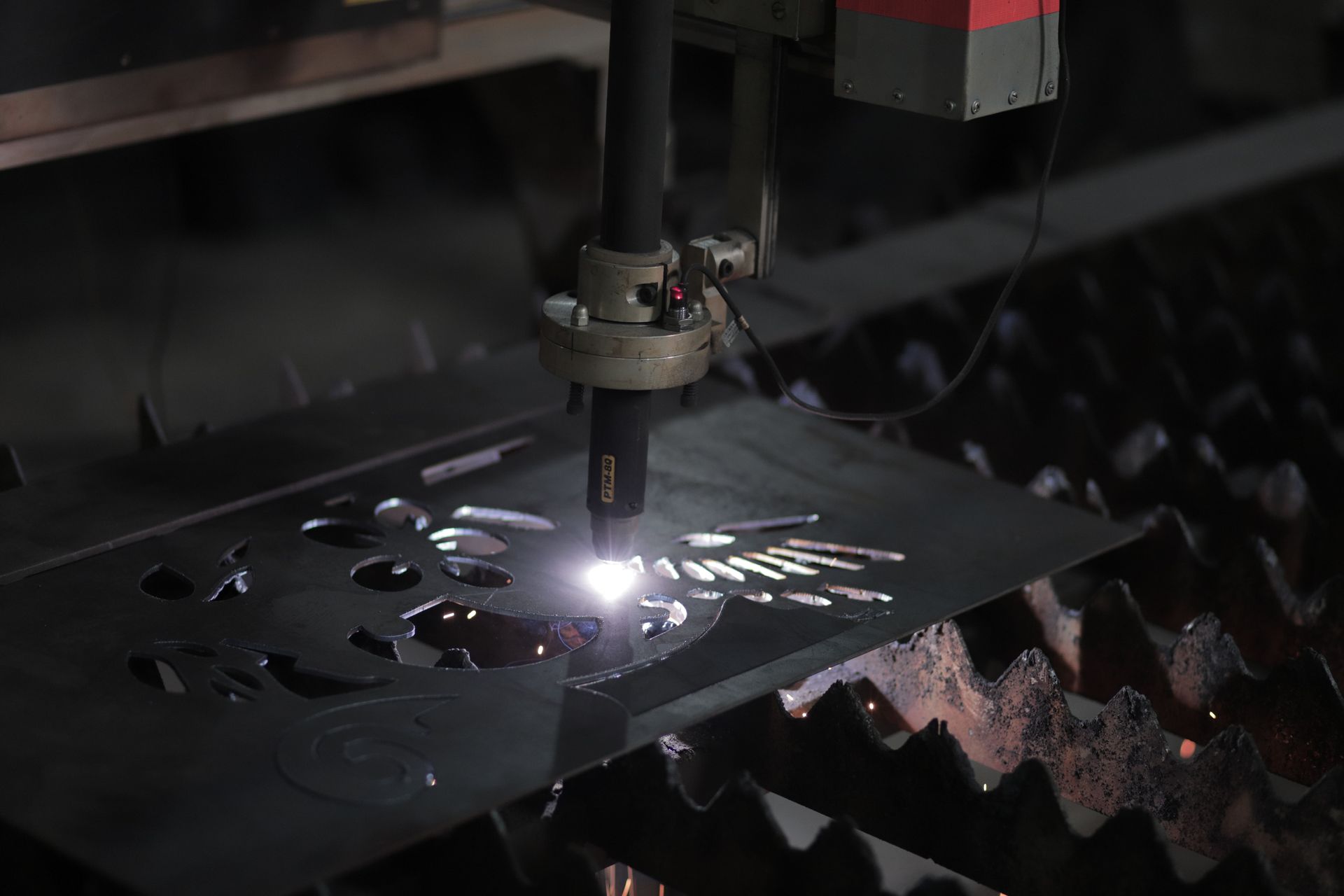
Most fabrication projects don't begin with a clean drawing—they begin with a worn part that needs to be reproduced, a piece of equipment that needs a custom bracket, or a design that exists only as a rough sketch and a set of dimensions written on a work order. Eagle Cutting & Supply handles metal fabrication in Texarkana at each of those starting points, working through cutting, shaping, and component preparation to produce usable parts and assemblies for industrial and commercial customers. The service covers custom one-off pieces, repair-related fabrication, prototypes, and production requirements, with access to waterjet cutting, laser cutting, bending, forming, and machining in the same facility.
Fabrication work begins by establishing what the finished component needs to do—its function within an assembly, the loads it will carry, the connections it needs to make, and the material it will be made from. That functional understanding drives decisions about how stock is cut, how pieces are shaped, and what sequence of operations produces a component that works as intended rather than one that merely resembles the target geometry. In a region like Texarkana where industrial customers span oilfield, agriculture, transportation, and manufacturing sectors, fabrication requirements vary widely in scale, material, and complexity.
Discuss your project materials, dimensions, quantities, and goals with the Eagle Cutting & Supply team to determine the right fabrication approach.
What Proper Metal Fabrication Requires
Metal fabrication is not a single process—it is a coordinated sequence of operations selected based on what the part requires at each stage. A component that begins as a flat blank cut by waterjet or laser moves into bending or forming to achieve three-dimensional geometry, then into machining if specific holes, bores, or surface conditions are required, then into finishing or assembly if the project calls for it. The quality of the final component depends on how accurately each step transfers geometry from one operation to the next, which is why access to multiple processes in one facility reduces compounding error and simplifies project coordination.
Customers receiving finished fabricated components from Eagle Cutting & Supply can evaluate them directly against the original drawing or sample part—features should align, assemblies should fit together without forced correction, and dimensions should match what was specified at the outset. For repair-related fabrication, the observable result is a replacement or modified component that installs and functions within the equipment it was made for, returning the machine or structure to service. That direct connection between the fabricated part and its intended function is what separates a properly executed fabrication project from one that requires post-delivery correction.
Fabrication projects that involve multiple operations—cutting, bending, machining, and assembly preparation—benefit most from being planned as a complete sequence rather than as individual steps handed off between vendors. Material selection affects how cutting and forming behave, which in turn affects how machining is approached. Customers are encouraged to bring material specifications, quantity requirements, and any drawings or physical samples at the outset so that the full scope can be evaluated before production begins. Projects without formal drawings can often begin with a sample part measurement and a conversation about function and fit.
What to Know Before Starting a Fabrication Project
These questions reflect the considerations that industrial customers and maintenance teams typically work through when planning a custom fabrication project.
What starting information does a fabrication project need?
A drawing, a physical sample part, or a clear description of the component's function and dimensions provides enough context to begin evaluating material, process sequence, and scope—formal engineering drawings are helpful but not always required to start a conversation.
How does fabrication support repair and maintenance work rather than new construction?
Fabrication can reproduce worn or broken components from a physical sample, modify standard stock to fit an existing assembly, or produce custom brackets and structural pieces that aren't available through a standard parts supplier.
Why does keeping cutting and fabrication with one provider simplify a project?
When the shop that cuts blanks also bends, forms, and machines them, dimensional problems identified mid-process can be addressed immediately—coordination delays between separate vendors are eliminated, and part geometry is tracked from raw material through finished component.
When is waterjet cutting preferred over laser cutting within a fabrication sequence in Texarkana?
Waterjet is typically preferred for thicker material, heat-sensitive alloys, or parts that require machining immediately after cutting—laser cutting is often more efficient for thinner sheet work where edge quality from the laser is sufficient for the downstream operation.
What affects the cost of a custom fabrication project most significantly?
Material type and quantity, number of operations required, complexity of geometry at each stage, and whether a formal drawing exists or needs to be developed from a physical sample are the primary factors that determine project scope and cost.
Eagle Cutting & Supply brings cutting, machining, and fabrication together for industrial customers across the Texarkana area. Call (903) 838-4579 or bring your part, drawing, or project description in to talk through what your fabrication work involves.